
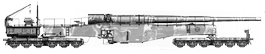
‘United Russia’ - Armored train
Before September 7, 1918 it was called the “Long Range Battery” Bronepoezd (Armored Train)
Before November 16, 1918 it was called the "5th Armored Train" Bronepoezd (Armored Train)
Finally named the ‘United Russia’ Bronepoezd (Armored Train)
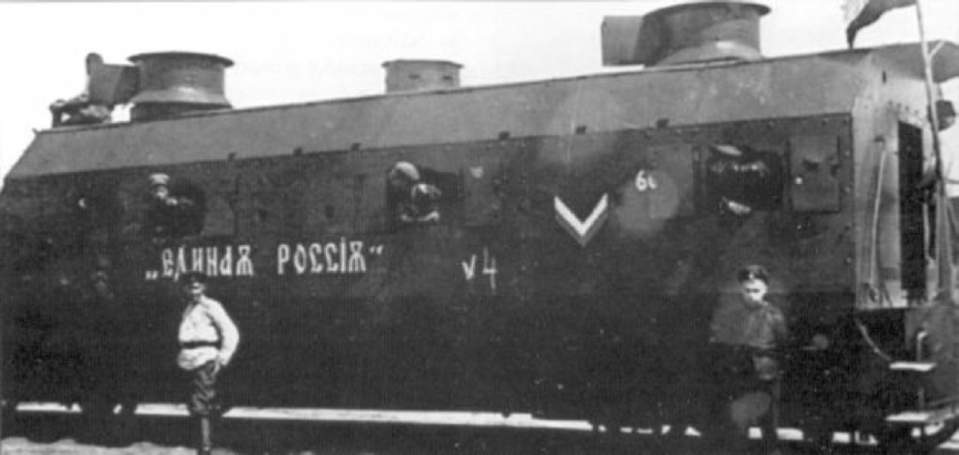
‘Edinaya Rossiya’ Bronepoezd on the Tsaritsyno direction in 1919
White Forces South of Russia
Machine-
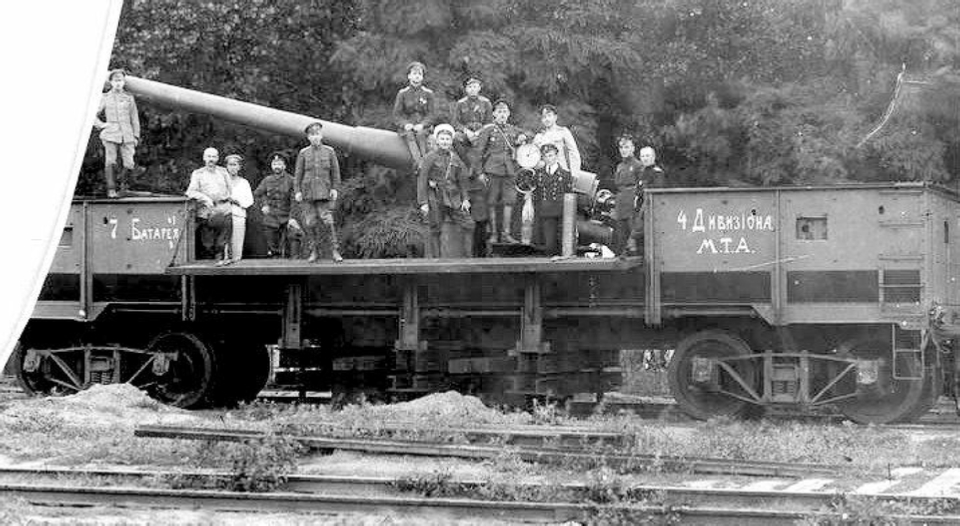
A group of white army officers on the artillery railway platform "7 battery of the 4th division MTA", in 1919

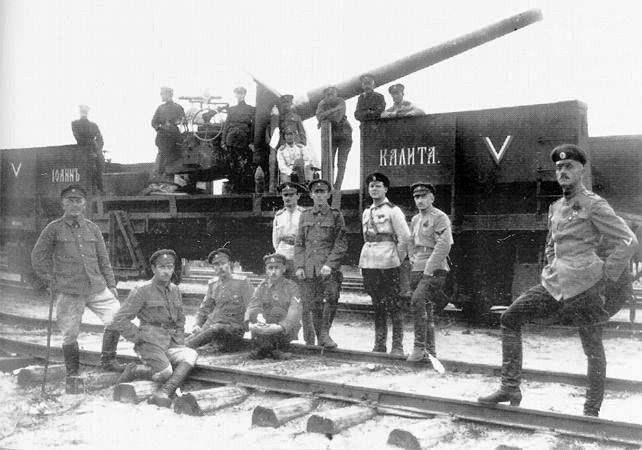
"United Russia" and "Ivan Kalita" Armored trains where both armed with the same type of heavy naval guns.
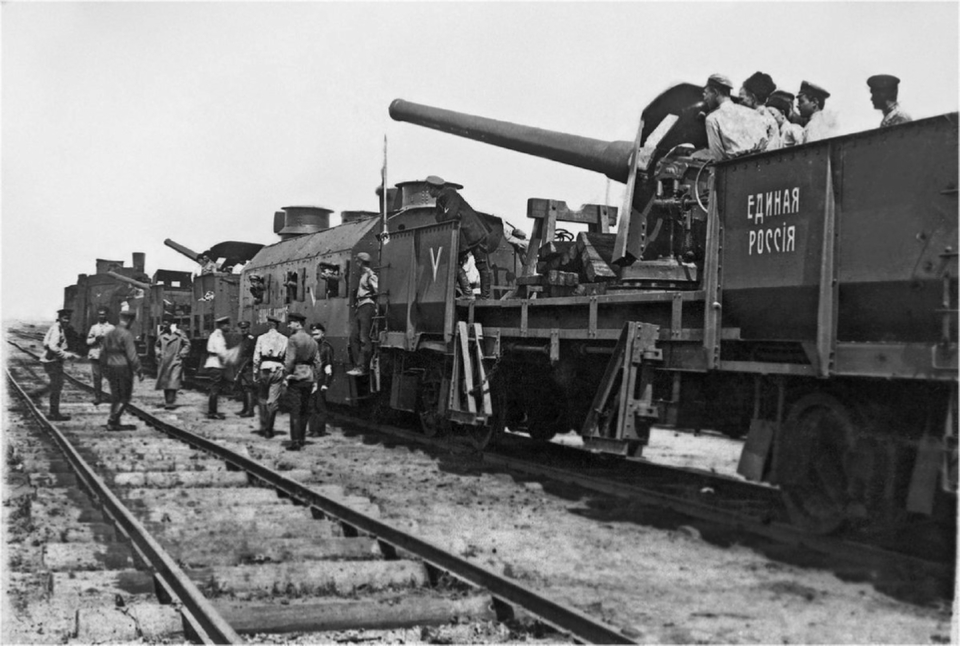
Armored train ‘United Russia’ on the Tsaritsyno direction in 1919.
Creation History
The first heavy armored train in the Volunteer Army . Created on July 1, 1918 at the Tikhoretskaya station from captured armored platforms as a "Long-
Armament: two 105-
Combat Use
Armored train of the Good Army "United Russia", took part in the 2nd Kuban campaign .
Then, for the first time, as part of the Volunteer Army, an armored train took part in the capture of Korenovskaya .
Third battle for Tsaritsyn – "United Russia" twice took Armavir , participated in the offensive on Stavropol , in the offensive in the Donetsk basin and in the world's largest military operation of armored trains near Tsaritsyn , where it was sent to support the units of General Baron P. N. Wrangel. During the operation in June 1919, which ended with the capture of the city by the troops of Peter Wrangel , the armored train took an active part, especially distinguished itself on June 15-
In 1919, the armored train was transferred to the Moscow direction . On the night of September 20, he took part in the capture of the city station in Kursk .
Then he was sent to the rear to fight the peasant uprising led by Nestor Makhno . In the battle at the Sofievka station, "United Russia" was put out of action by the Makhnovist steam locomotive that had rammed it. On November 12, the armored train was towed to Donbass to the Yenakievka station for repairs, then on December 10 to continue repairs to Novorossiysk , to the Sudostal plant. Disbanded on the 12th and abandoned on March 13, 1920 during the evacuation of Novorossiysk. In March 1920, after the Whites abandoned the city and was evacuated by sea to the Crimea, "United Russia" went to the Reds without a fight and was never restored.
Revived in March 1920 in the Crimea on the basis of the 3rd battery of the 1st battalion of naval heavy artillery. From April 16, 1920, he was part of the 1st armored train division. Abandoned on November 1, 1920 during the evacuation of Sevastopol.
Commanders
July 1, 1918 -
April 7, 1919 -
November 3, 1919 -
April 14, 1920 -
June 7, 1920 -
August 24 -
October 1920 -
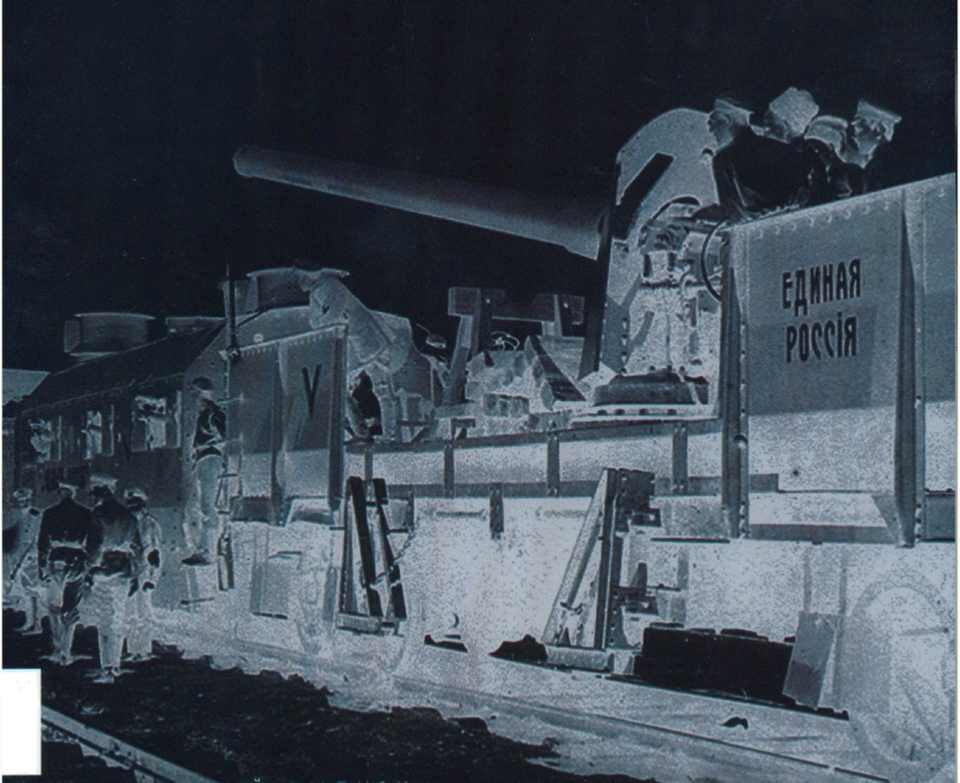
Campaign photograph of an armored train of white (Armed Forces of the South of Russia) United Russia, Tsaritsyn direction, mid-
"United Russia" ("Long Range Battery", "5th Armored Train")
The armored train "Long-
In July 1918, an armored train took part in the offensive from Tikhoretskaya at the Sosyka and Kushchevka stations. In particular, in the battle at the station Kislyakovka "Battery" destroyed the Red armored train with artillery fire.
Subsequently, after the capture of the Caucasian "Long-
On September 7, 1918, the armored train began to be referred to as the "5th Armored Train", and after 2 months, it received its final name "United Russia". So far, nothing is known about the actions of the armored train in the next month.
After the capture of Armavir by the Taman army on September 13, 1918, United Russia switched to the Armavir-
At the beginning of 1919, the United Russia armored train operated in the Donetsk basin. By that time, the armored train consisted of 2 armored platforms with 152 mm and 102 mm guns, and one machine-
Since the beginning of July 1919, United Russia has been fighting at Tsaritsyn. Among the direct opponents of the armored train were 2 Red military flotillas.
On the night of September 20, 1919, United Russia, together with the ‘Officer’ armored train, suddenly broke into the Kursk station and captured the city station, after which Kursk was taken by the Volunteer Army.
November 12, 1919 "United Russia" went to Donbass for repairs at the station. Enakievka . On December 10, the armored train left Yenakievka to continue repairs to Novorossiysk at the Sudostal plant.
The warhead of the armored train was left in Novorossiysk in March 1920. However, later the name "United Russia" was given to another heavy armored train, formed in the same March 1920 in the Crimea. It can be assumed that the United Russia team fought on it, having crossed to the Crimea from Novorossiysk. It is also possible that the guns, or even the armored platforms of United Russia, were also transported to Crimea by sea, which were subsequently installed on a new armored train in Crimea.
The newly created armored train fought in the Crimea until the end of October 1920. On November 1, before the last volunteers left the country, the armored train was destroyed by a head-