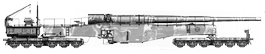
This article describes the history and fate of specific armored trains that have ever operated on Tuapse. Armored trains of the Volunteer Army have always prevailed on Tuapse, and Tuapse is an exception in this respect among other roads, where the red armored trains always had more. However, the Taman army, for example, in 1918 had at least two armored trains on the Armavir-Tuapse section, which also actively took part in hostilities. Probably, after the capture of Armavir by the Tamans on September 13 and abandonment on October 13, these armored trains left for the Armavir - Nevinnomysskaya branch and subsequently fought in this direction. But it cannot be ruled out that some of the Red armored trains then went further along Tuapsinka, to Stavropol.
~~~
The civil war in the south of Russia in 1918-1920 became an important part of the history of Tuapse. First of all, because this road turned out to be in one of the centers of events, and it was on it that many of the most important and decisive events took place in that war. Many settlements, including the important junction stations Armavir and Stavropol, changed hands several times, and the actions of armored trains and supplies by rail played a decisive role in the outcome of the battles.
Even more important was the civil war on the road itself. Especially for the Stavropol-Armavir section, built a year and a half before the start of the war, working for this war, destroyed in hostilities and closed immediately after its end.
The participation of the railway in the civil war is before the actions of armored trains - one of the most important and significant forces in that war.
Material about the actions of the armored trains of the Volunteer Army was collected after the end of hostilities by cadet A.A. Vlasov, who himself fought on armored trains on the southern front. It was published in the Russian émigré magazine Voennaya Byl in Paris in 1969-1971, and formed the basis for the materials presented here on the history of the Civil War in Tuapse. In addition, the sources were the memoirs of P.N. Wrangel and some other sources.
Perhaps, the presentation of the course of the railway military operations of the Civil War turned out to be somewhat one-sided, since the author of the site does not yet have any materials about the actions of the armored trains of the Red Army.
The history and fates of specific armored trains operating on this road during the Civil War are described in the section "Armored trains of Tuapseinki" .
~~~
The civil war in Tuapsinka began on July 21, 1918, when the Volunteer Army under the command of Colonel Shkuro captured Stavropol. Already on July 27, the first "Tuapse" armored train of volunteers, "Light armored train No. 2", was formed . In early August 1918, with the participation of this armored train, the Volunteer Army repelled the Red attack on Stavropol.
And already in the second half of August, volunteers, with the support of armored trains, stormed Armavir:
... In the second half of August 1918, the Volunteer Army attacked Sorokin's Red Army, which occupied the Armavir region with its junction. Armored trains could support our units operating along two railway lines: Stavropol - Armavir and Kavkazskaya - Armavir. On the line from Stavropol were at that time a light armored train number 2 and a long-range battery . At the end of August, in the battle at the station Derzhavnaya , the mechanic of the Long-range Battery was killed and the commander of the Battery, Colonel Skopin, and two officers were wounded. Lieutenant Colonel Levikov took over the temporary command of the Battery ...
At the same time, on September 1, the Taman Red Army occupied Tuapse, and then fought against Armavir along Tuapsinka to join up with Sorokin's units.
Armavir was taken by the Volunteer Army on September 3-4, 1918. Thus, the Stavropol-Armavir branch ended up entirely in the hands of volunteers, whose main task was to defend Armavir from the Tamans advancing from the west.
... On September 6, the 1st Armored Train and the Marine Armored Train arrived at the Andrei-Dmitrievskaya station , on the Armavir-Tuapse railway line, 20 versts south-west of Armavir. There they were placed at the disposal of the commander of the Samur infantry regiment. Next station, Kurgan, was busy with red. Later it turned out that these were the advance units of the Taman army, advancing from Tuapse to Armavir. Our armored trains were ordered to carry out a night raid on Kurgannaya station and moved towards this station at about midnight. Ahead was the 1st Armored Train, followed by the Marine Armored Train. An auxiliary train went even further, which was not intended for military operations, but to help armored trains and to repair the track. Due to the fact that the path was illuminated by bright moonlight, the armored trains moved quite quickly. When 1st Armored. the train approached along a high embankment to a bridge over a ravine near the village of Mikhailovskaya, then in the darkness near the railway a detachment of infantry was discovered. These infantrymen calmly passed the armored train. But when, in response to a shout from an armored train, they called the questioner "comrade",then it became clear that it was red. Fire was immediately opened on them, and they rushed from the embankment into the ravine. The meeting was unexpected for everyone. The mechanic of the 1st Armored Train, without waiting for an order, hastened to reverse. At that time, sufficient experience was not yet acquired in the joint movement of two armored trains. The second Marine armored train did not expect this maneuver and continued to move forward. There was a collision. The rear safety platform of the 1st Armored Train and the front safety platform of the Marine Armored Train were smashed and derailed. The safety platforms as part of the armored train were ordinary commodity platforms, on which there were no weapons, but spare rails and tools were added in case of track repair. The very name "safety" indicated that these platforms,placed in front and behind the combat composition of the armored train, had to a certain extent to protect the combat platforms from derailing in the event of a railway track malfunction. Due to the collision, the return route for the 1st Armored Train was blocked. An auxiliary train was called. Meanwhile, it was full daylight. An armored train of the Reds appeared from behind the hill behind the ravine. The first shell from the 1st Armored Train exploded on the way just in front of the Soviet armored train. He immediately moved back and disappeared behind the hill, firing several shells on the way. These shells gave flights. From the direction of the village of Mikhailovskaya, two Red howitzers began to shoot at our armored trains. The naval armored train uncoupled the broken safety platform and stepped back somewhat to fire on the red cavalry,which began to move to the rear of armored trains. Fearing damage to the track in the rear, which could lead to the death of two armored trains, the commander of the Marine armored train, who was temporarily the head of a group of armored trains, decided to retreat without waiting for the clearing of the path at the site of the collision. Fulfilling the order received, the team of the 1st Armored Train removed the bolt from the gun, took with them some of the machine guns and shells and plunged into the Marine armored train. The rest of the machine guns were rendered unusable. After that, the Marine armored train quickly departed to the Andrei-Dmitrievskaya station and joined our troops. An attempt made on September 7 to save the combat personnel of the 1st Armored Train was unsuccessful. This task was beyond the strength of the Marine armored train alone with the dismounted command of the 1st Armored Train, all the more so,that the advancing Reds began to push back our units.
On September 8, the Marine armored train took part in the defense of the Andrei-Dmitrievskaya station and stopped the advance of the Reds with successful fire. The Soviet detachment undertook a detour and suddenly approached the station where the so-called "reserve" of the armored train was located, that is, ordinary carriages adapted for the crew's habitation. If the size of the armored train team allowed it, then the team was divided into two shifts. They went into battle in an armored train one by one. Then the unoccupied shift was at the "reserve" cars. The Reds were ready to rush to these cars, but the company of the Samur regiment arrived just in time. The Marine armored train also approached from the position, as they managed to notice the artillery shelling of the station from it. One of the enemy shells smashed the compartment of the commander of the Marine armored train in the "reserve" carriage ...
... On September 10, the "Officer" armored train left Armavir along the Tuapse railway, advanced 16 versts from the position of our troops and suddenly attacked Andrei-Dmitrievskaya station, which by that time was occupied by the enemy. Met with fire from two batteries and an armored train of the Reds, the armored train "Officer" slowly retreated until evening, firing at and holding back the chains of the Soviet infantry. The Soviet offensive led to stubborn battles for Armavir from 11 to 13 September. The red sailors were advancing in three thick chains on the trenches, the occupation by a company of the Samur regiment near the Armavir station of the Tuapse railway... The naval armored train crashed into the Red lines, opened fire on them and forced them to withdraw. On the same day, the Soviet infantry launched three more attacks, but each time they were repulsed with the help of the Marine armored train. When the Reds cut the railway line towards the Kavkazskaya station, the Marine armored train had to gradually retreat with a fight to the Armavir-Tovarny station, and then to the Armavir-Passenger station. After leaving Armavir by our troops, the Marine armored train crossed the Kuban River to the Ubezhenskaya station and fired at the Reds who were trying to cross the river. Part of the machine-gun team with two machine guns was temporarily landed for the defense of two fords across the Kuban ...
Thus, the Taman army united with Sorokin's units, and the Red Army south of the Vladikavkaz railway had enough strength to storm Stavropol from the south. The offensive of the Reds to Stavropol began in the first half of October 1918.
... The naval armored train was at the disposal of the head of the 3rd division, General Drozdovsky. The "reserve" of the armored train, that is, the carriages adapted for housing, were left at the Stavropol station. The warhead operated along the Stavropol-Armavir line. The armored train was reinforced with a newly attached armored platform with a naval 100 mm. tool. By the evening of October 12, the Reds launched an offensive in large forces. The Marine armored train located near the Nedremennaya station supported with its artillery fire parts of our Plastun brigade, which were forced to withdraw. About half of the available 75 mm was used up. m 47 mm. shells. On the morning of October 13, the Marine armored train entered the position occupied by units of the 2nd Officer Regiment near the Tatarka station... The day passed calmly, but by evening information was received about a deep detour by the Reds of our left flank in the direction of Stavropol. At 8 o'clock. In the evening, with the permission of General Drozdovsky, the Marine armored train set off to supply water to the Stavropol station. There he was to await a battle order. If the order was not received, in the absence of changes in the situation, the armored train had to return to its old position at the Tatarka station by dawn.
At 2 am on October 14, the Marine armored train , having received no new orders, left Stavropol for a position. On the way, he was fired at by machine-gun fire several times. When the armored train reached the position, our troops were not there. The shelling of the Marine armored train began from the village. Tatar. The armored train began to slowly withdraw. At dawn, 3 officers and 2 soldiers sent by General Drozdovsky were met. They reported that a bypassing column of Reds was approaching the Bazny junction.... General Drozdovsky orders the armored train to hastily return to Stavropol, where to receive and carry out a combat order sent back at midnight. The naval armored train moved back to Stavropol and in the morning fog, with poor visibility, entered the Bazny junction. Only at a distance of 200 paces was it seen from the front armored platform in the notch ahead - a section of the path destroyed and littered with sleepers. At the same time, a large concentration of red infantry was seen in the valley to the right. Later it turned out that these were the Soviet 1st and 3rd Taman regiments. Machine-gun fire was opened on them from the armored train. The armored train had neither a telephone nor a speaker. Screams from the front armored platform about the spoiled track were not heard on the steam locomotive, which was, according to the accepted rules, in the middle of the combat staff. The naval armored train ran into a pile of sleepers.The control platform and the front gun platform derailed. The Reds began to throw grenades at the open front armored area. The weapon jammed on it. Command the front armored platform, firing the last 5 shells of another 47 mm. guns, managed to move to the second armored platform. The ensuing attack of the Reds was repelled only by rifle and machine-gun fire, since the second was 75 mm. the gun could not fire because of the notch, but 100 mm. the gun was not adapted for firing from the side, that is, across the railroad track. Coming out of the landing car, the commander of the armored train, Senior Lieutenant Makarov, ordered the team to leave the armored train and retreat to Stavropol on foot.At this time, the commander of the armored train, Senior Lieutenant Makarov, was mortally wounded. Staff-captain Kazansky and Lieutenant Vargasov, who hurried to his aid, were killed by shots at close range. The senior officer of the armored train, Captain Laiko, took command. At his order, the ranks of the armored train began to retreat in a chain, firing back from machine guns and rifles. The Reds pursued the team of the armored train, leading strong rifle and machine-gun fire. The team began to suffer heavy losses. Red cavalry rode out to her flank, treacherously putting on shoulder straps and distinctive white corners on their caps. Therefore, they were admitted to a close distance. To the demand to surrender, the ranks of the Marine Armored Train responded by shooting. Several horsemen were killed, and the rest scattered. The retreat with battle continued at a distance of about 2 versts. Then the chains of the red stopped chasingso as not to expose your flank to the units of the 2nd Officer Regiment. During the abandonment of the armored train and the departure of 42 ranks of the armored train team, 18 people were killed. and 5 people were wounded. In addition to the previously named officers, the following were killed: Staff Captain Prince. Shakhovskoy, warrant officers Zavadovsky and Khrushchev, warrant officers of the fleet Polyakov, Lysenko and Berezovsky, military pilot Lieutenant Gavrilov. After emerging from the fire of the Reds, the wounded ranks of the team were arranged on requisitioned carts. The team of the Marine Armored Train arrived in Stavropol, and at about 4 o'clock. In the afternoon, the composition of the "reserve" of the armored train, overcrowded with our wounded and civilian refugees, departed in the direction of the Kavkazskaya station. Stavropol was taken by the Reds on October 17 ...During the abandonment of the armored train and the departure of 42 ranks of the armored train team, 18 people were killed. and 5 people were wounded. In addition to the previously named officers, the following were killed: Staff Captain Prince. Shakhovskoy, warrant officers Zavadovsky and Khrushchev, warrant officers of the fleet Polyakov, Lysenko and Berezovsky, military pilot Lieutenant Gavrilov. After emerging from the fire of the Reds, the wounded ranks of the team were arranged on requisitioned carts. The team of the Marine Armored Train arrived in Stavropol, and at about 4 o'clock. In the afternoon the composition of the "reserve" of the armored train, overcrowded with our wounded and civilian refugees, departed in the direction of the Kavkazskaya station. Stavropol was taken by the Reds on October 17 ...During the abandonment of the armored train and the departure of 42 ranks of the armored train team, 18 people were killed. and 5 people were wounded. In addition to the previously named officers, the following were killed: Staff Captain Prince. Shakhovskoy, warrant officers Zavadovsky and Khrushchev, warrant officers of the fleet Polyakov, Lysenko and Berezovsky, military pilot Lieutenant Gavrilov. After emerging from the fire of the Reds, the wounded ranks of the team were arranged on requisitioned carts. The team of the Marine Armored Train arrived in Stavropol, and at about 4 o'clock. In the afternoon the composition of the "reserve" of the armored train, overcrowded with our wounded and civilian refugees, departed in the direction of the Kavkazskaya station. Stavropol was taken by the Reds on October 17 ...military pilot Lieutenant Gavrilov. After emerging from the fire of the Reds, the wounded ranks of the team were arranged on requisitioned carts. The team of the Marine Armored Train arrived in Stavropol, and at about 4 o'clock. In the afternoon, the composition of the "reserve" of the armored train, overcrowded with our wounded and civilian refugees, departed in the direction of the Kavkazskaya station. Stavropol was taken by the Reds on October 17 ...military pilot Lieutenant Gavrilov. After emerging from the fire of the Reds, the wounded ranks of the team were arranged on requisitioned carts. The team of the Marine Armored Train arrived in Stavropol, and at about 4 o'clock. In the afternoon, the composition of the "reserve" of the armored train, overcrowded with our wounded and civilian refugees, departed in the direction of the Kavkazskaya station. Stavropol was taken by the Reds on October 17 ...
Meanwhile, while the Marine Armored Train and General Drozdovsky's units were defending Stavropol, the 1st Kuban Rifle Regiment and Plastun battalions from the north were attacking Armavir. On October 13, Armavir was again taken by the Volunteer Army.
In the second half of October, the volunteers began an offensive against Stavropol from the north, from the west and from the south. A division of General Kazanovich operated along Tuapsinka from the southwest with the support of the "1st Armored Train" and the heavy armored train "United Russia" . However, armored trains on Tuapsinka did not reach Stavropol, although they were urgently needed there (for more details, see "The Mysteries of the Novokavkazsky Bridge" ).
On November 1, 1918, Stavropol was taken. A few days later, a volunteer offensive began on Petrovskoe (Svetlograd).
... From 13 to 16 November , the Forward for the Motherland armored train was at the disposal of General Wrangel, who was appointed commander of the Cavalry Corps of two divisions. In the area of the Spitsevka station (on the Stavropol - Petrovskoye line), the armored train supported units of the 2nd Kuban Cossack Division of General Ulagai, which fought a stubborn battle with the superior forces of the Reds. Returning on November 17 in the evening, as usual, to Stavropol to supply water and fuel, the Forward for the Motherland armored train crashed, as it ran into a quarry arrow on the stretch, which was maliciously transferred to the field. The entire combat staff derailed and was badly damaged. After that, the armored train was sent for repairs to the Tikhoretskaya station ...
Thus ended the first period of the Civil War in Tuapse. Throughout 1919, the railway remained entirely in the hands of the White Guard authorities.
The hostilities returned to the Tuapse region only on February 7, 1920, when the cavalry groups of the XI Red Army reached the village. Petrovsky (Svetlograd). From that moment on, a withdrawal of almost 2 months with battles of volunteers began and the offensive of the Red Army along the entire Tuapseinka from Petrovsky to Tuapse began.
The author of the site has not yet managed to find any mention of the use of armored trains and, in general, the role of Tuapsinka in battles in these years from Petrovsky to Armavir. On February 29, the regiments of the Red Army entered Stavropol, and moved to Armavir.
Meanwhile, battles also began in the Armavir-Tuapse sector, after the so-called "green" partisan detachments appeared there. These were detachments of peasants who were dissatisfied with the forced mobilization into the army of Denikin and sympathized with the Socialist-Revolutionaries.
... The armored train "General Kornilov" was sent around February 20 to the Armavir-Tuapse railway line. On this line there was already an armored train "Forward for the Motherland" , which on February 19 went for reconnaissance to the Goyth station, about 35 versts from Tuapse, for information about the so-called "green". On the armored train "Forward for the Motherland" there was a landing from the 14th Plastun battalion. He was accompanied by the Atamanets armored train of the Don Army. On February 23, the Forward for the Motherland armored train was ordered to move, after being replaced by the General Kornilov armored train, to the Krymskaya station, 45 versts from Novorossiysk. The change took place, and the Forward for the Motherland armored train arrived on February 26 at the Armavir junction. But on the same day, the Kavkazskaya junction station, on the same main line of the Vladikavkaz railway, was occupied by the Reds. It seemed impossible to follow the destination. By evening, the commander of the Kuban corps, General Pisarev, arrived at the Armavir station from Stavropol. Commander of the armored trainForward for the Motherland "came to him for orders and was given the task of standing at the Armavir station, protecting it and the city from possible actions of local Bolsheviks. On March 1, Armavir was abandoned by our troops, and the armored train" Forward for the Motherland "departed together with corps toKurgan station , 40 versts, approximately, from Armavir, in the direction of Tuapse ...
... The armored train "Forward for the Motherland", which departed to the Armavir - Tuapse railway line, received an order from the commander of the 4th Kuban corps on March 4 to go to the Nikolenko station (Nikolenkovo - approx.), About 65 versts from Tuapse, to assist l4 -m Plastun battalion in the defense of the designated station. In the evening, under pressure from the excellent forces of the "green", our small infantry left the Nikolenko station and retreated under the cover of an armored train to the Ganzha station(now Komsomolskaya - approx.).
On March 9, the Forward for the Motherland armored train reached the Goyth station , about 35 versts from Tuapse, with an assault force consisting of an Armavir officer company and a Plastun battalion . Our armored trains stood at night at the Goyth station while the debris was being cleared in the tunnels, and by the evening of March 10 they arrived in Tuapse. Around March 15, the Tuapse group of armored trains was formed, at the head of which was put Captain Zuev, the commander of the Stepnoy armored train. After several days spent in Tuapse in reserve, the Forward for the Motherland armored train set off on March 21 to the Goyth station, carrying a shunting locomotive and several carriages loaded with stones to block the tunnels. Our armored trains "General Kornilov" were already at the Goyth station.and "Thunder of Victory"... Our three armored trains set off about 15 versts further, to the Navaginskaya station, and found out that the enemy troops were not advancing. Nevertheless, the head of the 2nd Kuban division ordered to fill up the tunnels at the Goyth station, which was done. On March 22 and 23, teams of armored trains: "General Kornilov", "General Drozdovsky", "Thunder of Victory", "Stepnoy" and "Atamanets" and the 3rd battery of the Naval Heavy Artillery received an order from the Chief of the Tuapse Region Group of Forces, General Pisarev, to disarm their armored trains. The locks were removed from the guns, machine guns and stocks of shells and ammunition. After that, the teams were taken by steamer to the Crimea. The commander of the Forward for the Motherland armored train, Captain Yuriev, was ordered to choose the lightest of the abandoned armored platforms.which could act on the path of the unfinished railway Tuapse - Sochi, covering the retreat of our troops. One of the armored platforms of the Victory Thunder armored train was chosen. On March 24, the Forward for the Motherland armored train took part in the rearguard battle at the Goyth station. On the same day, part of the armored train crew was taken to a steamer in the port of Tuapse, onto which two guns and towers were also loaded from the armored platforms of the Forward for the Motherland armored train and two guns from the armored platforms of the General Kornilov armored train. In the evening the steamer set off for the Crimea.On the same day, part of the armored train crew was taken to a steamer in the port of Tuapse, onto which two guns and towers were also loaded from the armored platforms of the Forward for the Motherland armored train and two guns from the armored platforms of the General Kornilov armored train. In the evening the steamer set off for the Crimea.On the same day, part of the armored train crew was taken to a steamer in the port of Tuapse, onto which two guns and towers were also loaded from the armored platforms of the Forward for the Motherland armored train and two guns from the armored platforms of the General Kornilov armored train. In the evening the steamer set off for the Crimea.
This was the last battle on Tuapse. About a week earlier, the fighting had also ended in the Stavropol Territory, in the Armavir direction. But Tuapsinka no longer took part in them. The road destroyed by the war was dead. Life from it went to the Stavropol Territory along with the era that gave birth to it, when on the rails of competing railway companies rolled to the Black Sea from the rich grain lands loaded with grain for export trains.
It will not be long before famine begins in the regions rich in bread before. From the Stavropol-Armavir section, they will begin to remove rails for other sections, and then the residents of the neighboring villages will drag the station buildings to the stones, and even rubble will be completely removed from the embankments. A new era began, in which there was no place for the Stavropol-Armavir railway.